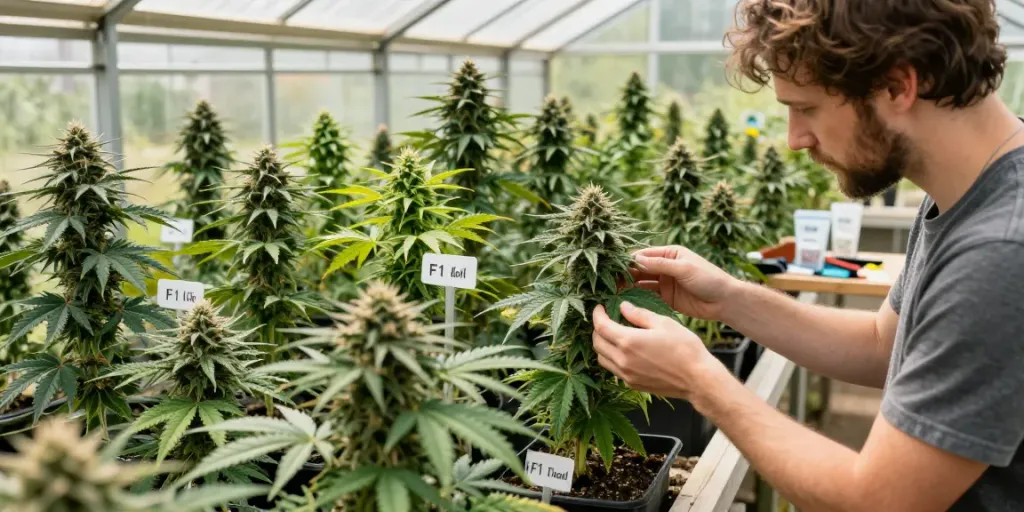
Understanding F1 Triploid Seeds
As the cannabis industry continues to evolve, growers are increasingly drawn to innovative breeding techniques that promise enhanced yields and crop stability. One such advancement is F1 triploid seeds, which provide significant advantages over traditional cannabis seed types. These seeds are engineered to include three complete sets of chromosomes, offering unique characteristics that can transform cultivation practices.
What Are F1 Triploid Seeds?
F1 triploid seeds are cannabis seeds that possess three sets of chromosomes, differentiating them from the more common diploid seeds, which have two sets. This unique genetic makeup results from the crossing of a tetraploid parent (four chromosome sets) with a diploid parent. The resulting offspring are triploid, leading to distinctive traits that can significantly impact growth and yield.
How Are They Different from Other Cannabis Seeds?
To understand the advantages of F1 triploid seeds, it's essential to compare them with other cannabis seed types like feminized and autoflower seeds. Unlike feminized seeds, which are selectively bred to produce only female plants, triploid seeds do not guarantee a specific sex. Similarly, unlike autoflower seeds that flower based on age rather than light cycles, F1 triploid seeds focus on genetic stability and potential yield improvements.
Genetic Makeup: The Science Behind Triploidy
The triploid condition in cannabis arises primarily from a breeding technique known as chromosome doubling, followed by hybridization. The interaction of three chromosome sets during meiosis can lead to reduced fertility, which is why triploid plants often exhibit limited seed production when pollinated. However, this characteristic is beneficial for growers aiming for higher flower yields without the troublesome seeds that can accompany traditional cannabis strains.
Advantages of Growing F1 Triploid Seeds
Higher Yield Potential Compared to Traditional Seeds
One of the standout benefits of cultivating F1 triploid seeds is their higher yield potential. Research indicates that triploid strains can produce 30% to 100% more flowers than their diploid counterparts. This increase is linked to the triploid plants’ ability to allocate more resources toward floral development rather than seed production.
Improved Resistance to Pollen and Environmental Stress
F1 triploid seeds are particularly valued for their resilience. Due to their genetic design, these plants tend to exhibit reduced sensitivity to environmental stressors and pests. This trait not only helps maintain quality during cultivation but also reduces the likelihood of cross-pollination, which can be detrimental in a cannabis garden.
Accelerated Flowering Times for Faster Harvests
Another compelling advantage is the accelerated flowering time associated with F1 triploid seeds. Growers can expect faster maturation rates, allowing for quicker harvest cycles. This efficiency translates into more frequent crop rotations and increased profitability for commercial growers.
Triploid vs. Feminized vs. Autoflower Seeds
Key Differences and Benefits of Each Type
When choosing between F1 triploid, feminized, and autoflower seeds, understanding the key differences is paramount. Feminized seeds are ideal for growers looking to produce a consistent crop of female plants, which is essential for maximizing cannabinoid production. Autoflower seeds, on the other hand, are best for those seeking ease of growth with a quick turnaround. F1 triploid seeds blend the best of both worlds, offering high yield and reduced risk of unwanted seeds, making them an excellent choice for serious cultivators.
Choosing the Right Seed for Your Grow Setup
Selecting the right seed depends on several factors including your grow environment, experience level, and desired outcomes. For instance, F1 triploid seeds thrive in controlled environments where growers can optimize conditions for maximum yield and quality. If you're new to cannabis cultivation, you might want to start with autoflower seeds before progressing to more sophisticated varieties like triploids.
Common Misconceptions About Triploid Seeds
Despite their advantages, there are several misconceptions surrounding triploid seeds. Some growers mistakenly believe that triploid seeds are completely sterile, but this isn't entirely accurate. While reduced fertility is common, environmental factors and specific parental genetics can influence the plant's ability to produce viable seeds.
Best Cultivation Practices for F1 Triploid Seeds
Optimal Growing Conditions for Maximum Yields
For successful cultivation of F1 triploid seeds, it’s crucial to create optimal growing conditions. These plants perform best in environments with controlled temperatures, proper humidity levels, and adequate lighting. A well-managed grow room can significantly influence the health and yield of triploid plants.
Feeding and Nutrient Requirements
Triploid cannabis plants generally require a tailored nutrient regimen. Nutrient formulations should be high in nitrogen during the vegetative phase, transitioning to higher phosphorus and potassium levels as flowering begins. Regular monitoring of pH levels and nutrient uptake is essential to ensure healthy growth.
Identifying Common Pests and Diseases
Like all cannabis plants, F1 triploid seeds are susceptible to various pests and diseases. Common threats include spider mites, aphids, and powdery mildew. Implementing integrated pest management strategies, including natural predators and organic treatments, can help mitigate these risks while preserving the integrity of your crop.
Future Trends in Cannabis Seed Breeding
Advancements in Genetic Engineering and Breeding Techniques
The future of cannabis breeding is bright, with ongoing advancements in genetic engineering and biotechnology. These innovations promise even greater stability and yield potential, expanding the possibilities for growers. F1 triploid seeds are just the beginning of a new wave of robust cannabis strains that will redefine cultivation practices.
What to Expect in the Cannabis Market by 2026
By 2026, the cannabis market is expected to see a surge in demand for high-yield, stable genetic varieties. F1 triploid seeds will likely become increasingly popular among commercial growers seeking to maximize profits and streamline production processes. The trends indicate a more sustainable approach to cannabis cultivation where quality and efficiency reign supreme.
Emerging Opportunities for Growers of F1 Triploid Seeds
As the cannabis landscape continues to shift, growers who adopt F1 triploid seeds will find numerous opportunities. These seeds not only offer enhanced performance but also the potential to drive innovation within the industry. By staying ahead of breeding trends, growers can position themselves to capitalize on evolving consumer preferences and market dynamics.
What are the disadvantages of F1 seeds?
While F1 triploid seeds present many advantages, they are not without drawbacks. Their reliance on specific environmental conditions can make them more challenging for novice growers. Additionally, the reduced fertility means growers must carefully manage their growing environments to avoid unwanted pollination.
Where can I buy F1 seeds?
F1 triploid seeds can be sourced from reputable cannabis seed banks and specialized online retailers. It’s crucial to select a supplier known for quality genetics to ensure the best outcomes in your cultivation efforts.
Are F1 or F2 seeds better?
The choice between F1 and F2 seeds often comes down to the grower’s specific goals. F1 seeds are engineered for consistency and performance, while F2 seeds can introduce more genetic variability, which may interest those looking to explore unique genetic expressions.
Can you grow F1 seeds?
Yes, F1 seeds can be grown, but successful cultivation requires understanding their unique needs. With the right care and attention, growers can achieve impressive results with F1 triploid seeds.